Care Providers
The Pan-Africa Surgical Conference One Year Later: Reflecting on Progress, Challenges and Working Towards Surgical Equity
One year after the conference, leaders from Operation Smile, COSESCA and the University of Rwanda discuss the advances in strengthening surgical systems and expanding access to care throughout Africa.
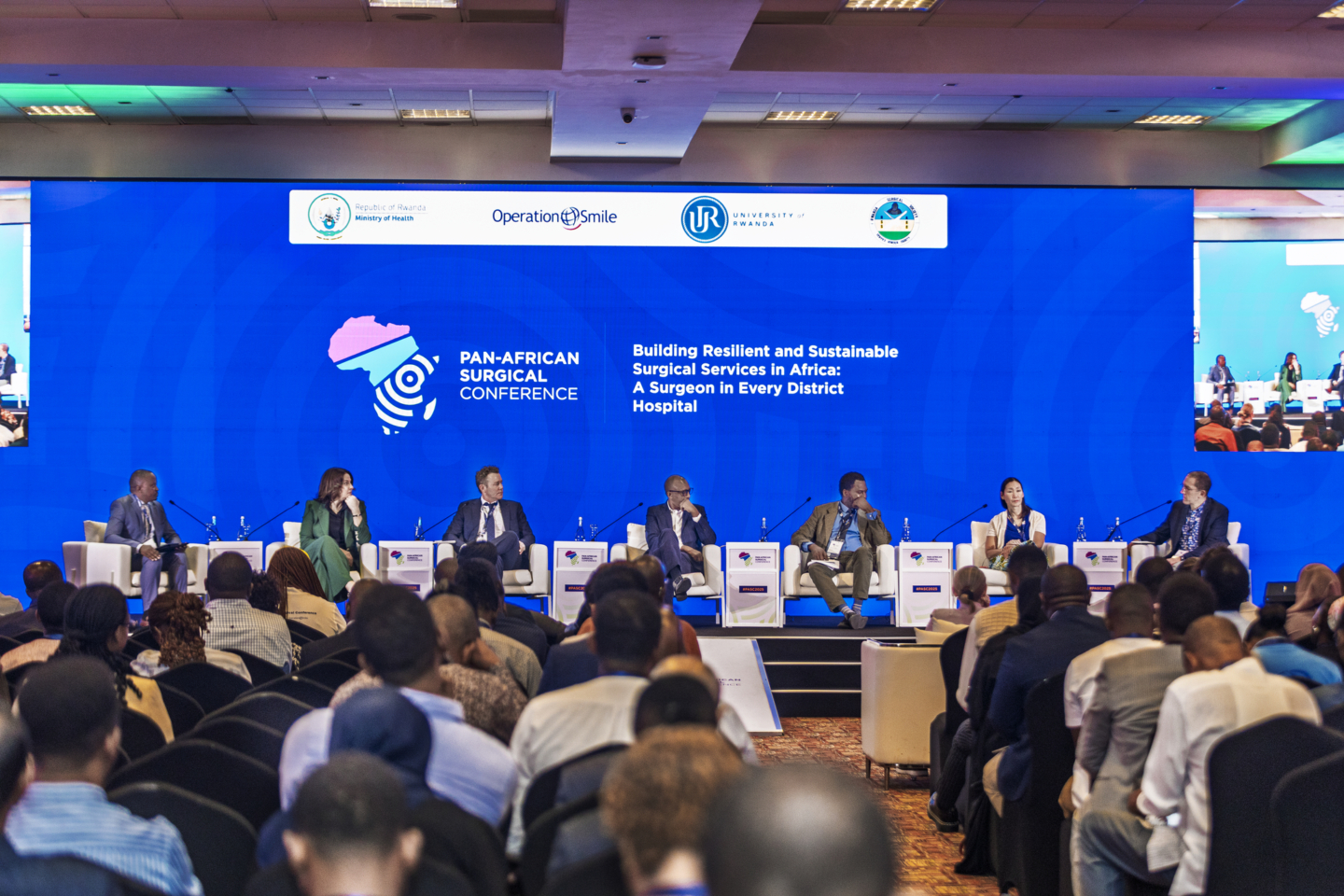
Safe surgery is a basic human right, not a privilege. More than 500 attendees from 36 countries gathered at the first ever Pan-African Surgical Conference in Kigali, Rwanda in February 2025 to discuss and find solutions to a universal problem: Over 5 billion people, mostly in low- and middle-income countries, lack access to safe, timely and affordable surgical care. This need is especially severe in Africa, which is anticipating a shortage of 6 million surgical care providers by 2030.
Now, a year later, key players from the conference’s strategic partnerships, including Operation Smile, COSESCA and the University of Rwanda, have come together to reflect on what they have been able to achieve in the past 12 months, what challenges remain and where hope and growth are blossoming in a live virtual event with Devex.
Catherine Cheney, senior editor for special coverage at Devex, kicked off the talk by showing Operation Smile’s brand film, We Build Hope. Focusing attention on patients’ scars as badges of hope and proof of access to safe surgery, the film highlights Operation 100, a bold commitment launched at the conference in 2025. The goal of Operation 100 is to create independent, complete surgical teams that can serve their communities, and bring care closer to patients’ homes by addressing the barriers that make access to safe surgery difficult, such as long distances, limited infrastructure and health workforce shortages.
As Elizabeth Coté, M.D., MPA, senior vice president of global programs at Operation Smile, explains, that strategy is about upskilling not just surgeons, but entire operating teams through training and mentorship in local communities. “We’re using the cleft surgery, which is an amazing, specific and circumscribed tool, to provide mentors — regional, international and local mentors mentors — not just for the surgeon, but also for the anesthesiologist, and the nurses and the biomed tech. All these trained professionals will help make safer surgery available to half a billion people in the communities alone, around these 100 plus hospitals that we are equipping.”
The lasting impact of the conference is already being felt, driving progress across Africa. “Afterwards we created the first Pan-African Surgical Association for Plastic Surgery” says Faustin Ntirenganya, M.D., MMED, FCS(Ecsa), DIU, FACS, Ph.D., head of surgery at the University of Rwanda. But he adds, there is also another direct kind of result from that conference. “Before the conference, I knew a few other surgeons. Now we have become a big village.” Operation Smile has now co-created a five-year strategy to address the country’s surgical needs, with improvements at sites in Ruhengeri, Gisenyi, Kibuye, Bushenge, Kibungo and Rwinkwavu.
Stella Itungu, CEO of the College of Surgeons of East, Central and Southern Africa (COSECSA), acknowledges that while progress has been made, challenges remain. “We train within hospitals, but there are very few training sites compared to the need,” she says, acknowledging the hunger for health care education, especially among women. “We have many applicants, like 650, but are able to take half of that. Some lack training sites. Some lack funding. Another challenge that we have is the unequal distribution of health workers or trainers in the region.”
As Coté reminded the thousands of attendees of the virtual conversation, everyone knows someone in their lives who has needed surgery. “It’s personal, which is why everyone can contribute to help,” she implores. “We’re all connected to each other with a unique contribution to make, so that surgery is accessible to everyone who needs it.” Circling back to the video that kicked off the talk, Coté adds, “We want everybody who does need healing, and could have their own scar as a ‘badge of hope,’ to be able to receive care within their home communities.”
Read the Impact Report
This impact report, examining the Pan-Africa Surgical Conference, one year later, highlights the progress since the Pan-African Surgical Conference, from locally led solutions addressing distance and infrastructure gaps to investments in surgical workforce training and systems strengthening.